
Which files can I import and export?
Import CSV, TSV, Excel or JSON, crawl either site directly, or reuse an SEO Project. Export accepted matches as CSV or JSON, or send them to Google Drive.
URL Mapping Tool
Match old URLs to relevant new destinations, review every suggestion and export an approved 301 redirect map for your SEO migration.










URL mapping explained
URL mapping is the old-to-new plan behind a website migration. It connects legacy entry points to the relevant pages that should replace them.
Use crawl data, uploaded files or an existing SEO Project.
The matcher compares paths, structure and content to suggest relevant new pages.
Approved old-to-new pairs can become a 301 redirect export.

Human review
Each suggestion has a reason and a review state, so your team can focus on redirects that need judgment.
Inspect match type and confidence alongside the old and new URL.
Locale, page type, intent and many-to-one guards highlight questionable targets.
Accept, edit or leave a pair pending before it enters the export.
Inside the product
Filter pending matches, edit a destination and save your decisions. Export the accepted map when it is ready for implementation.
Start mapping URLs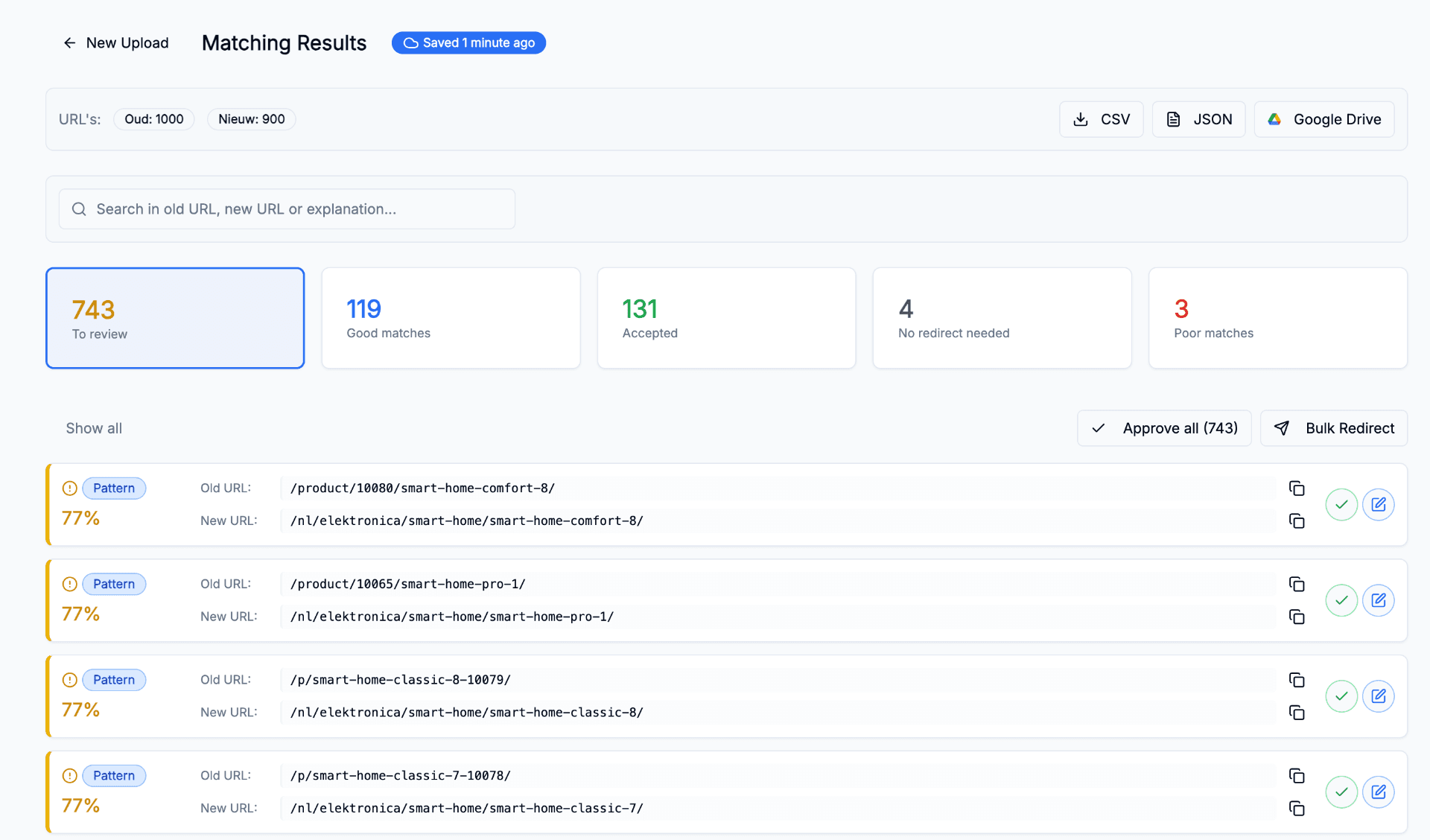
Where it helps
Keep product, category and content pages connected when a rebuilt site changes their paths.
Bring brands or subdomains into one site while keeping language versions aligned.
Handle category renames and path changes across families of URLs.
FAQ
Import CSV, TSV, Excel or JSON, crawl either site directly, or reuse an SEO Project. Export accepted matches as CSV or JSON, or send them to Google Drive.
Yes. Locale guards help keep language versions in the right URL structure and flag cross-language suggestions for review.
No. URLMatcher exports the reviewed redirect map for your team or developer to implement on the website or server.
Limits depend on your plan and available credits. Saved sessions keep review decisions available across matching runs.
Start with your URL inventories and build the map for your next site move.