Continuous monitoring

SEO Projects

Keep crawl snapshots, URL Explorer, project issues, internal PageRank, link opportunities and Google Search Console analysis together for one site.

SEO Projects dashboard
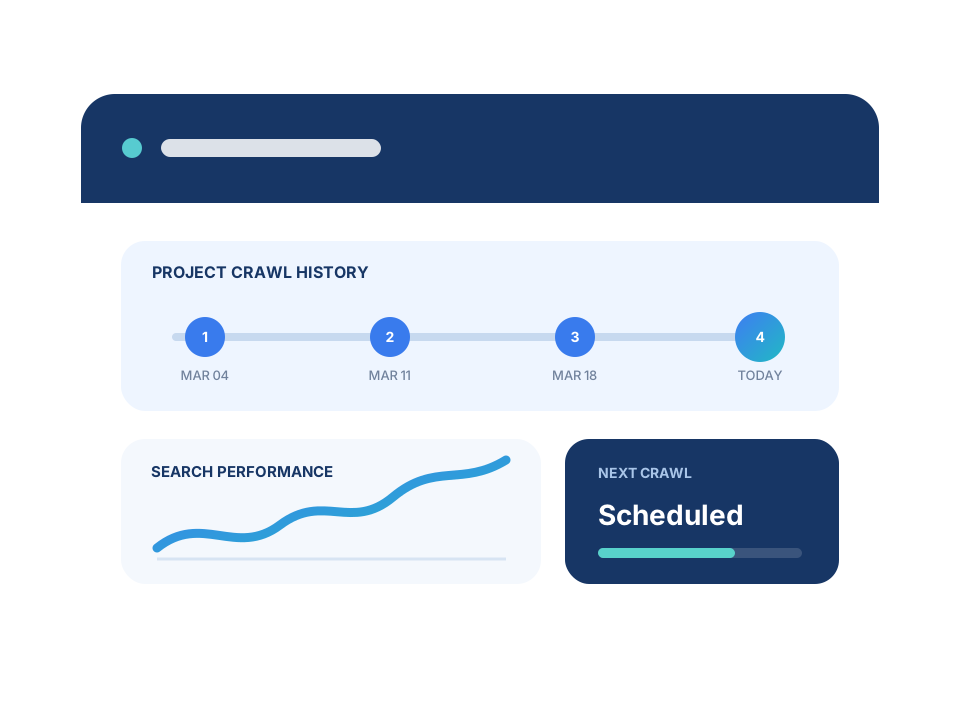
Project crawl
Data ready
Next crawl
Scheduled
Between audits

A site changes after every release and content update

An SEO Project stores crawl snapshots and keeps findings attached to the affected URLs. That makes it possible to compare what changed instead of rebuilding an audit from separate exports.

Technical

Broken canonicals, redirect chains, blocked pages, slow responses and indexability conflicts.

Content and metadata

Duplicate titles, missing headings, thin pages and metadata gaps.

Site structure

Orphan pages, crawl depth, sitemap differences and low-inlink URLs.

Duplication

Near-duplicate content groups and pages that may compete for the same search intent.

Internal links

Existing link relationships, PageRank and relevant opportunities that are not linked yet.

How it works

From setup to insight in 4 steps

01

Create a project

Add the site, sitemap and crawl scope.

02

Run or schedule crawls

Start on demand or use the crawl schedule available for your plan.

03

Review project findings

Open technical, content, metadata, structure and GSC analysis views.

04

Inspect the URLs

Drill into metadata, links, issues, keywords and crawl history per URL.

Capabilities

See crawl, search and URL changes in one project

Start with project health, then open the URLs, issues, links and Search Console views that need attention.

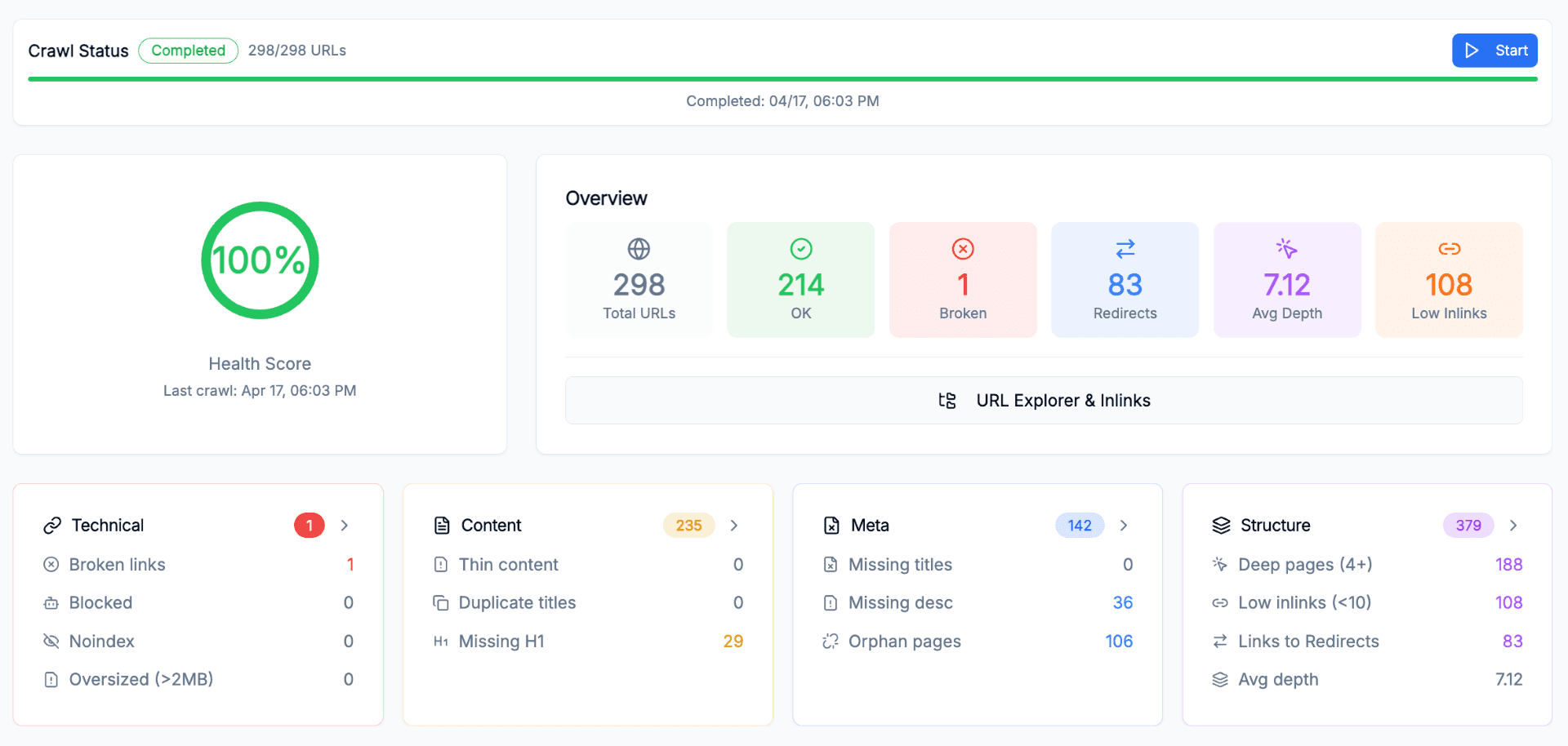
Project overview and crawl health

Check crawl status, page availability, redirects, depth and issue groups from the project overview.

Sample data
Project overview and crawl health in an URLMatcher SEO Project using sample data

URL Explorer

Inspect status, indexability, canonical, PageRank, inlinks, depth and sitemap presence per URL.

URL detailIllustrative flow
/products/trail-runner
Status: 200
Indexable
Canonical: self
In sitemap
TitleInlinksDepthPageRank

Issue triage

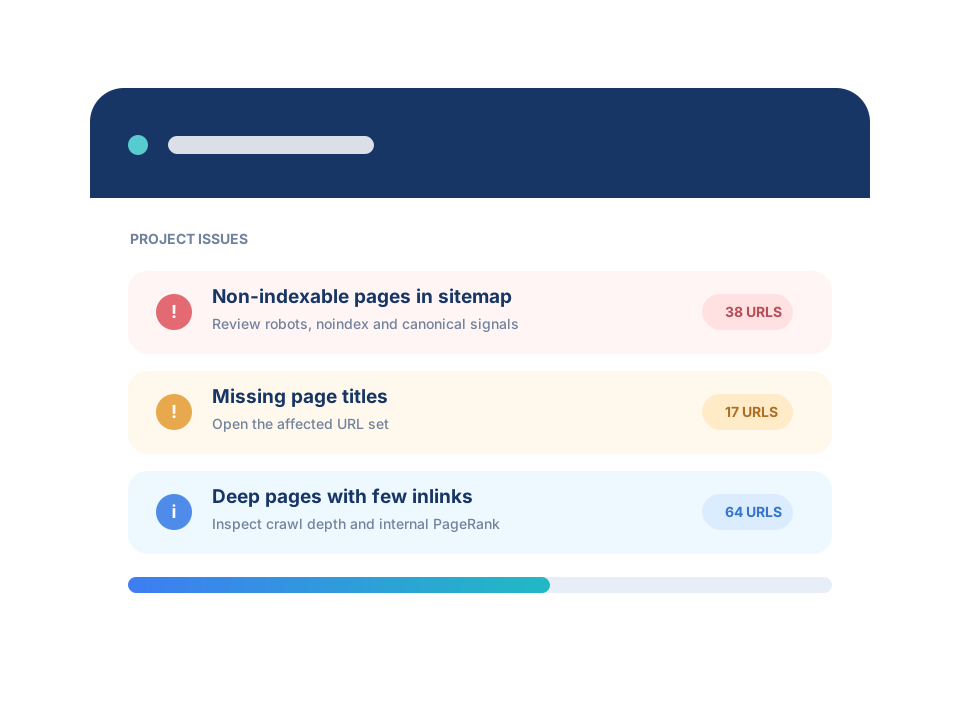
Open technical, content, metadata and structure findings with severity and URL-level explanations.

Sample data
Issue triage in an URLMatcher SEO Project using sample data

Internal PageRank and link graph

See how internal authority moves through the crawled link graph and which pages receive little support.

Internal link graphIllustrative flow
Home
Category
Guide
Target

Incoming and outgoing relationships remain available at URL level.

Duplicate content

Group near-duplicate pages for canonical, consolidation and cannibalization review.

Duplicate clusterIllustrative flow
/guide/running-shoesPrimary
/blog/running-shoe-guideReview
/advice/choose-running-shoesReview

GSC keyword intelligence

Connect queries with landing pages and review cannibalization, CTR gaps, decay, movers and indexing views.

Query and landing page matrixIllustrative flow
QueryLanding pageChange
trail shoes/trail-shoesStable
shoe sizing/size-guideGained
running guide/runningReview

URL performance

Compare periods per URL and open the queries that explain gains, stability or decline.

Period comparisonIllustrative flow
Gained
query group
Stable
query group
Declined
query group
Open the URL to see which queries explain the period change.

Crawl and path changes

Compare snapshots, find repeated URL renames and review sitemap and structural differences.

Crawl and path changesIllustrative flow
/shop/products//store/products/
Repeated path change across snapshots
New URLsRemoved URLsSitemap differences
Use cases

Built for teams that ship every week.

01

Agency monitoring

Keep each client domain in a separate project with its own crawl configuration, GSC connection and history.

URL Explorer, issue reports and performance exports stay attached to the project instead of being rebuilt from separate crawl files.

One project per client - clean separation
Scheduled crawls - plan-based frequency
Project history - compare crawl snapshots
CSV and Drive exports - issues and performance
02

E-commerce health

Review broken product pages, metadata gaps, duplicate listings and internal link depth from the same crawl.

Parameter variants remain visible, so filtered or generated product URLs are not silently merged into a cleaner dataset.

Technical issue view - 404, 500 and blocked
Duplicate product detection - near-duplicate scan
Internal link audit - orphan & low-PR pages
Noindex monitoring - catch accidental tags
03

Content team QA

Check new articles for accidental noindex, missing titles, orphan status and competing URLs.

Connect GSC to add query drivers, cannibalization, CTR gaps and content decay to the crawl-based checks.

Noindex monitoring - every new article
Title & meta checks - length & duplication
Inlink coverage - no orphan posts
GSC keyword views - drivers, decay and overlap
FAQ

Questions, answered.

Stop discovering SEO issues months too late.

Add the site, connect GSC when needed and keep crawl, issue and performance data in one project.

No credit card required