From automatic redirect mapping to post-migration validation and 404 recovery — three powerful tools to protect your SEO during every stage of a migration.
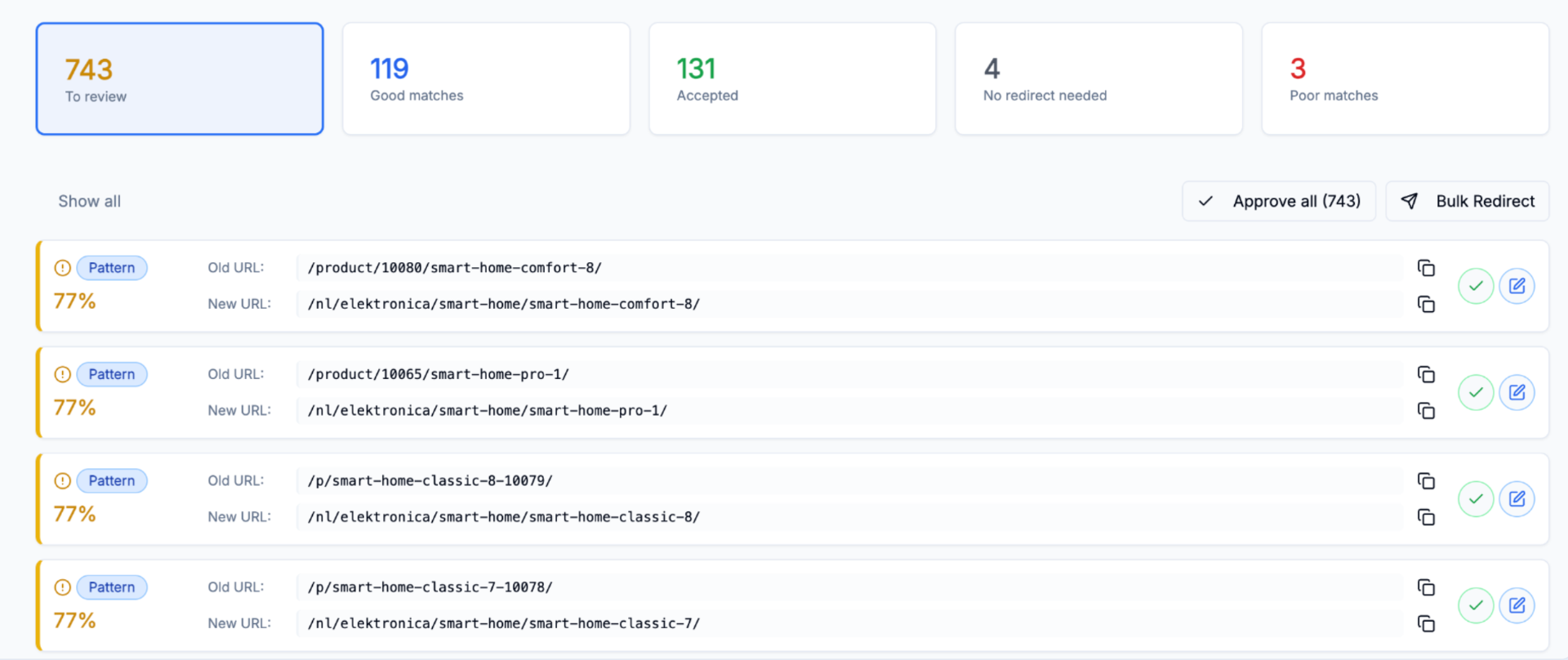
Automatic redirect mapping for website migrations
Upload your old and new site crawls and let the engine automatically generate a complete redirect plan. Advanced algorithms match URLs based on structure, slugs, and content — saving you hours of manual work while preventing SEO loss from missed redirects.
Why it matters
Manual redirect mapping is error-prone and time-consuming. The matching engine processes thousands of URLs in seconds with explainable confidence scores.

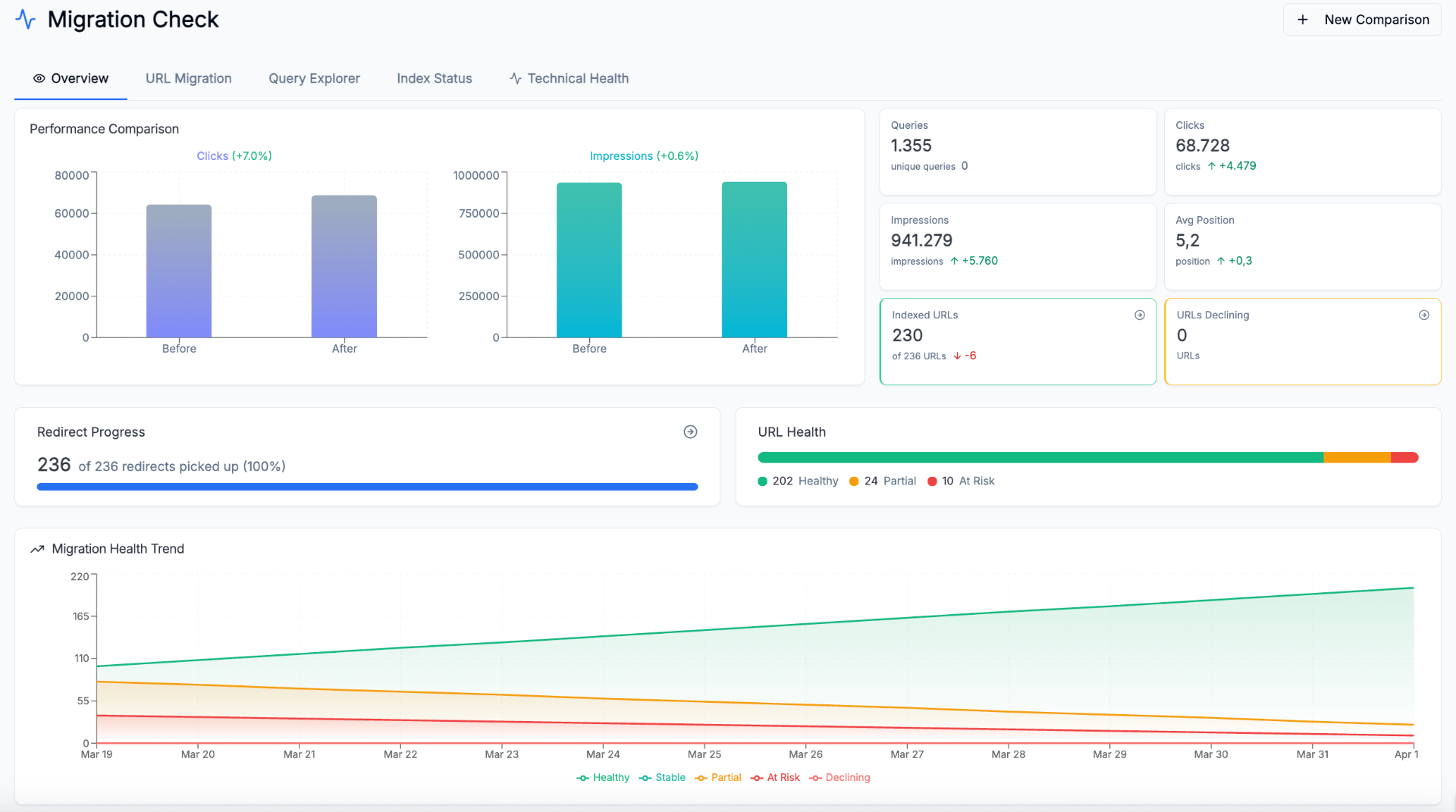
Validate your migration with Google Search Console data
Connect Google Search Console and compare SEO performance before and after your migration. See exactly which URLs are losing traffic, which queries shifted to new pages, and where value got lost — so you can act before rankings drop permanently.
Why it matters
Without validation, you won't know if your migration succeeded until it's too late. The cockpit surfaces problems within days, not weeks.

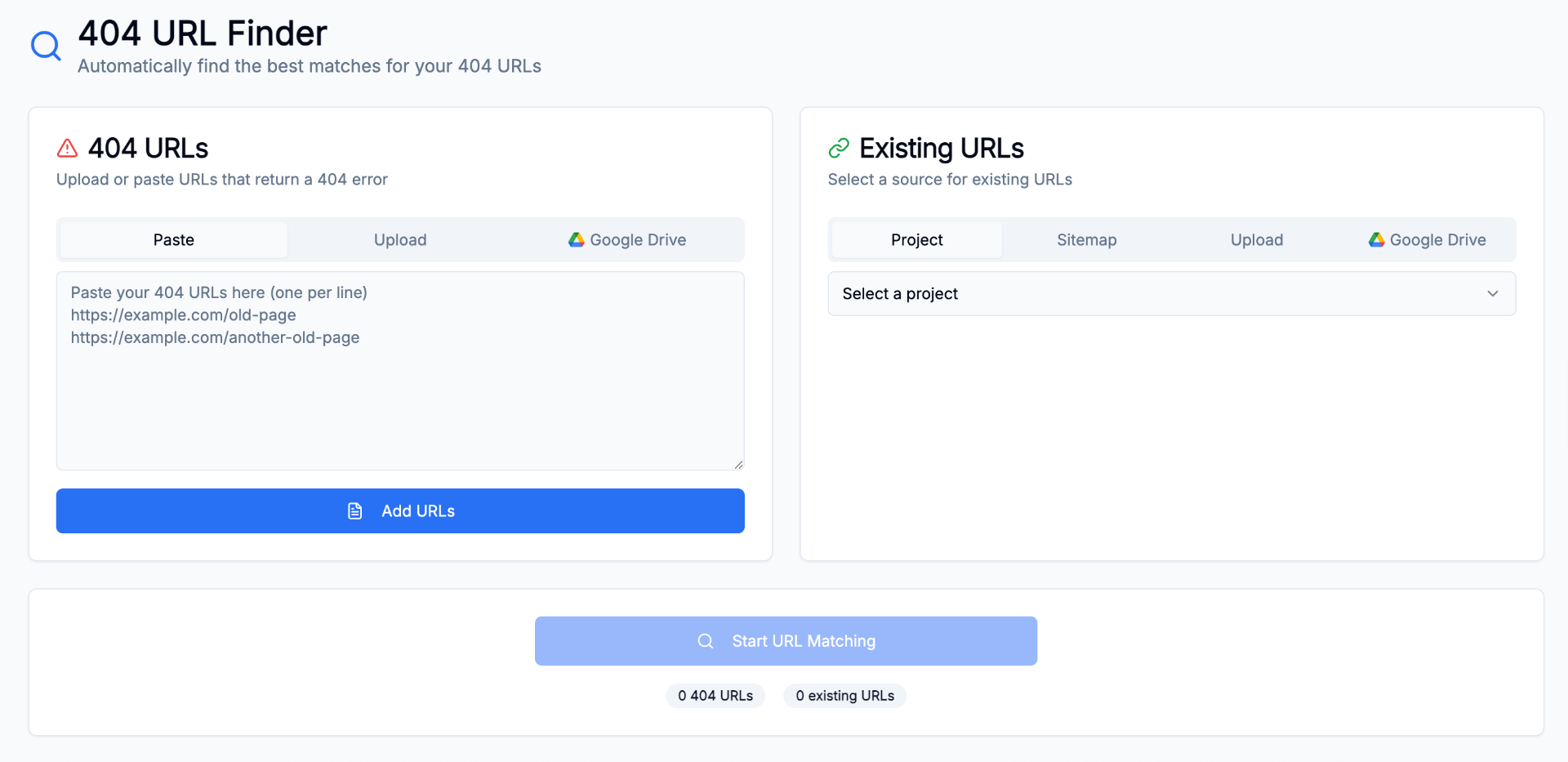
Fix broken links by matching 404s to live pages
Paste or upload your 404 URLs and automatically match them against your live sitemap or crawl data. The finder uses weighted token matching with category-aware fallbacks to suggest the best redirect target — so you can fix broken links fast without manual searching.
Why it matters
Every 404 is lost SEO value and a bad user experience. The finder turns dead-end URLs into working redirects in minutes.

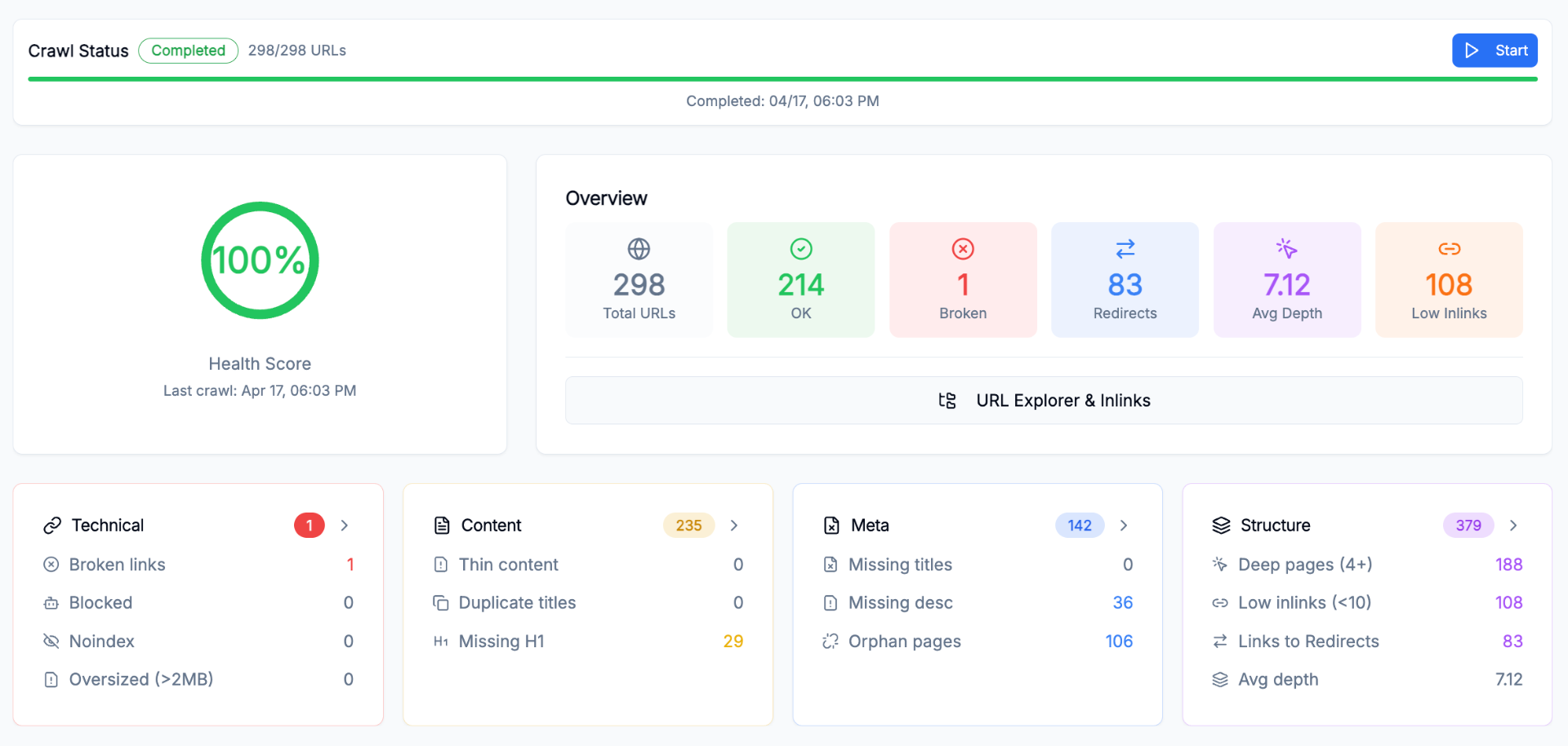
Continuous site health & link graph monitoring
Create a project per site and let URLMatcher continuously monitor structural health, indexing, duplicates and internal links. Scheduled crawls keep your site's health score up to date so SEO regressions surface fast — not months later.
Why it matters
Site health degrades silently between manual audits. Continuous monitoring keeps issues visible while they're still easy to fix.

Perfect for different types of website migrations
From complex to simple URLs, or from one structure to another with intelligent pattern matching.
Intelligently merge different domains with different URL conventions into a uniform structure.
Structural reorganization with intelligent slug matching and pattern recognition.